Reading Conditions Before Choosing Your Hunting Setup: What to Check First
A stand, blind or calling position may look sensible on a map yet fail when wind shifts, ground becomes saturated or access disturbs animals. Read conditions before choosing equipment or location. A few deliberate checks can improve safety, reduce disturbance and help you decide whether to proceed, move or stay home.
Start with the decision, not the gear
Define the objective before packing. Are you seeking a quiet observation point, a route that keeps your scent away from likely movement, or a legal way to reach a particular parcel? Each goal requires different equipment and positioning.
Begin with access. Identify where you can park, walk and set up without crossing restricted ground or sensitive habitat. Wet soil, fresh crops, nesting cover and recently used trails require extra care. A short route is not always better if it creates more noise or disturbance.
Set limits before time pressure or emotion takes over. Unsafe visibility, an unstable tree, dangerous travel conditions or uncertainty about a boundary should end the setup discussion until the issue is resolved. Ethical hunting includes knowing when a plan is unacceptable.
Read weather and wind as moving variables
A forecast is a starting point, not a fixed script. Wind direction, speed and consistency can change around ridges, timber edges, water and open fields. A position that works in a steady breeze may fail when air swirls after sunrise or drains downhill later.
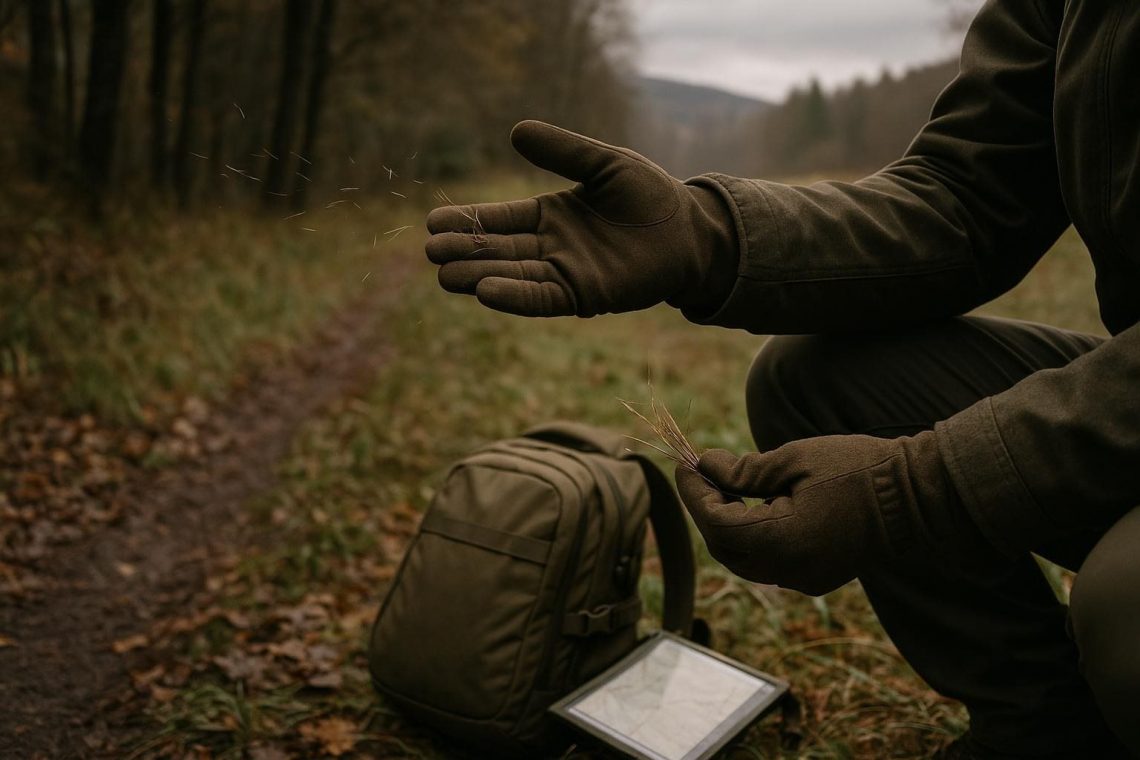
Check the wind along the approach and at the intended location. Light, loose material such as grass seed, ash or a small amount of unscented powder can show movement; test only when safe and away from other people. Watch treetops and exposed vegetation, since wind at shoulder height may differ from flow above a ridge.
Temperature and precipitation affect more than comfort. Rain can soften ground and quiet access, but it may also erase sign and make tracks more visible. A cold front or sudden warming can change animal movement and use of cover. Treat these conditions as reasons to adjust expectations, not promises of activity.
Let terrain assessment set the position
Study how people and animals are likely to move through the area. Fences, steep slopes, thick cover, water and vegetation changes may create funnels, but a narrow feature is not automatically a reliable travel route. Interpret recent sign alongside weather, food, cover and hunting pressure.
A useful position balances visibility, wind and a quiet exit. Consider where a safe, ethical shot could occur, what lies beyond the intended direction and whether branches or changing light could make identification difficult. If you cannot describe those conditions clearly before settling in, evaluate the location further.
Elevation may improve sightlines but expose movement during the approach. Low ground can conceal access while collecting scent or water. Terrain also affects sound: dry leaves, frozen ground and loose rock can make a planned route unusable. When permitted, walk the route in advance and identify alternatives instead of relying on one perfect path.
Match the setup to access and disturbance
The best setup is often the one that allows the quietest arrival and departure. Portable blinds, ground positions and elevated options involve trade-offs in visibility, concealment, comfort, safety and habitat impact. Choose according to the site and conditions rather than assuming one style works everywhere.
Keep equipment compact enough to handle without repeated trips. Each extra trip can add noise, scent and trampled vegetation. Avoid blocking established paths, damaging living trees or placing gear where another user may reasonably travel. On public or shared land, leave other hunters and outdoor users enough room to operate safely.
If the approach crosses the area you hope to hunt, reconsider the plan. Watch from farther away, use another entry route or wait for quieter conditions. Passing on a marginal position is a practical skill, not a wasted outing.
Verify rules before the outing
Regulations vary by jurisdiction, season, species, method, land classification and license type. Confirm current official requirements before leaving, including season dates, legal hours, permitted equipment, tagging or reporting duties, access restrictions and local closures. Do not rely on an old summary, a remembered rule or advice for another property.
Check land boundaries, permission, public-access status and posted restrictions. Carry the information needed to resolve uncertainty before setting up. If a rule is unclear, pause and seek clarification from the relevant wildlife agency or land manager.
Also confirm transport and handling requirements after a harvest. These details vary, and mistakes can affect compliance and responsible use of the animal. Verify rules close to the outing and again if the location or conditions change.
Use a short field check before committing
– Is the access route legal, safe and unlikely to damage habitat?
– Is the wind workable at the approach, position and likely exit?
– Can the surroundings and target be identified clearly?
– Is there a safe backstop and a responsible recovery route?
– Does the setup avoid unnecessary disturbance to wildlife and other users?
– Have current regulations, permission and required documentation been confirmed?
If one answer is no, solve the problem before unpacking. If it cannot be solved, choose another location or leave the hunt for another day.
Treat conservation as part of the setup
Habitat stewardship is part of preparation. Use existing paths where practical, limit vehicle travel on soft ground, pack out waste and avoid disturbing cover wildlife needs beyond the season. Do not force access across erosion-prone slopes, stream edges or areas closed for habitat work.
Ethical hunting also means knowing when not to take a shot. Poor visibility, a bad angle, excessive distance, uncertain identification or conditions that make recovery unlikely are clear reasons to wait. A successful day is not measured only by a harvest; it may mean learning how a place responds to weather and pressure without causing avoidable harm.
After the outing, record useful observations such as wind changes, access problems, disturbance and habitat conditions. Keep notes factual. They can improve future decisions and support a more careful relationship with the land-the foundation of sound conservation and responsible hunting.
